The Human Desire to Connect
Storytelling is the bedrock of civilization, and it is the foundation of every great brand. Whether you are selling software or a vision for a decentralized future, you are appealing to the same core human desires: trust, identity, and belonging.
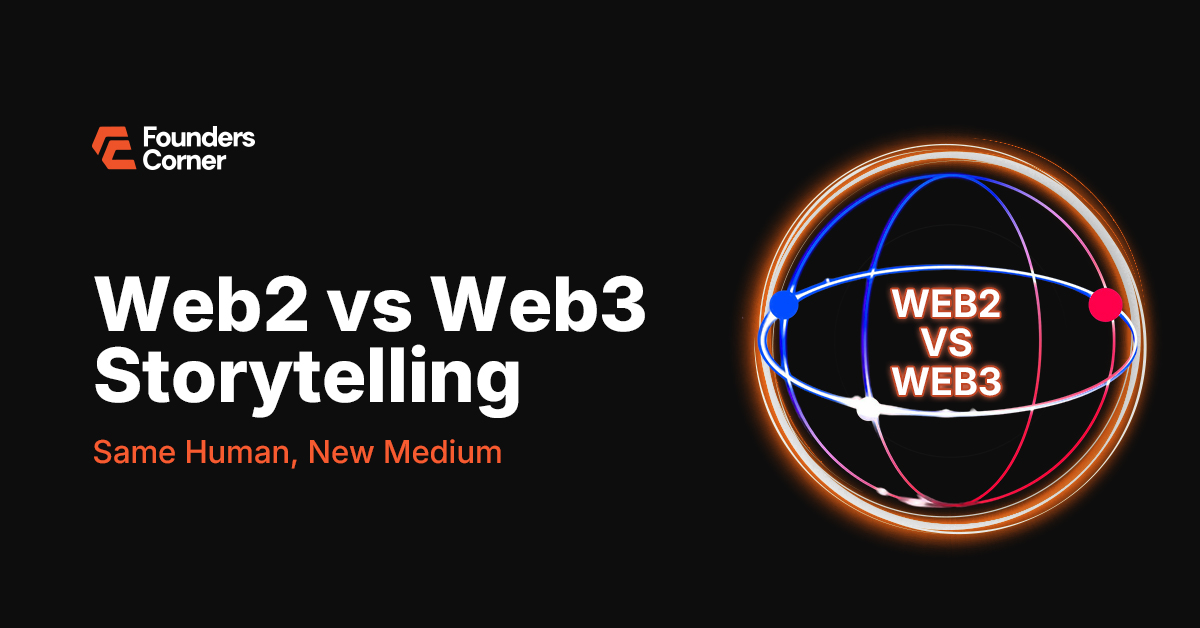
That constant human element has not changed. But the medium has fundamentally shifted. When a brand’s audience moves from passive consumer to active, data-owning stakeholder via Decentralized Identity (DID), the narrative structure has to change with it.
The Narrative Pivot: From Audience to Co-Author
In the Web2 era, the brand was the singular Storyteller. Content was pushed out, polished, and tightly controlled. The user was the Customer, measured by attention and purchases.
In Web3, the narrative changes. The brand becomes the Story Facilitator, and the community becomes the Co-Author. The user is now a Stakeholder, whose literal ownership (tokens, NFTs) gives them a vested interest in the story’s success. This pivot is made possible by the rise of Decentralized Identity (DID), where the user’s wallet is their digital passport and identity repository.
Web2 Storytelling: The Centralized Blueprint
This model relies on control and data extraction. The story is a one-way street, designed to lead to conversion.
- The Identity Model: Centralized & Extracted. Your digital identity is fragmented across platform logins (Google, Meta). Brands target you using opaque demographic data they do not own, but rent from the platform.
- The Content: Polished and Pushy. Messaging is meticulously crafted by PR and marketing teams to maintain a singular, managed brand voice. Content is distributed through algorithm-gated channels (paid social, SEO).
- The Trust Model: Trust in the Intermediary. You trust the big platform to be fair and you trust the brand because they appear in glossy ads or have high follower counts. The trust is placed in a central authority.
Web3 Storytelling: The Decentralized Saga
This model is built on transparency, ownership, and verifiability. The story is an ongoing, collaborative saga.
- The Identity Model: Self-Sovereign & Verifiable. Your crypto wallet address is your DID. It’s pseudonymous, yet linked to verifiable credentials (like owning a specific NFT or a governance token) that you control. Brands target on-chain behavior, not personal demographics.Insight: You can prove to a brand that you are a loyal community member (via an NFT in your wallet) without giving them your email address or real-world name. This enables private, permissioned, deep personalization.
- The Content: Authentic and Adaptive. Narrative control is shared. Community-generated content, memes, DAO proposals, and founder AMAs become integral parts of the story. The narrative is often open-source and built in real-time.
- The Trust Model: Trust by Verification (Code). Trust is embedded in the technology. Brands use the public, immutable ledger (blockchain) to prove their story, e.g., verifying ethical sourcing, public treasury balances, or community vote outcomes. The story is less “told” and more proven.
Founder Spotlight: Decentralized Identity as a Narrative Tool
Founders in Web3 are realizing that DIDs are not just a technical upgrade; they are a storytelling engine.
Jenkins the Valet Example: This successful NFT project did not just sell JPEGs; it sold the right to co-author a character’s journey. NFT holders used their owned identity/asset to vote on plot points and influence the narrative’s direction. The community’s collective identity was the story.
The Founder’s Lesson: Instead of creating a brand and finding customers, these founders created a shared identity and invited the community to define the brand’s future. The user is literally investing in their role as a co-creator.
The goal in Web3 is to move beyond mere engagement (which Web2 mastered) toward earned emotional investment. When a user’s digital identity and verifiable ownership status determine their role in the story, the connection moves from transactional to existential.
The Takeaway: From Monologue to Ecosystem
Web2 was a monologue delivered flawlessly from the stage. Web3 is a living, breathing ecosystem where every participant has a stake, a voice, and a verifiable identity that changes the plot.
For founders, the mandate is clear: Stop trying to control the story, and start building the transparent, rewarding systems (via DIDs and on-chain assets) that allow your most engaged users to write the next chapter.